Improve Braking Performance on a Mazda MX-5 ND (Track Brake Upgrade)
This 2019 Mazda MX-5 ND recently visited our workshop in Hoogvliet (Rotterdam). From the factory it comes with the 2.0 Skyactiv-G engine producing around 183 hp and a lightweight chassis of about 1105 kg—a perfect base for a fun and reliable track car.
The customer’s goal was clear: build a reliable track car. Because the customer had little track experience, we started with the most important safety and consistency upgrade: the braking system.
The problem: factory brakes + track heat
From the factory, the MX-5 ND braking setup is designed for street use. On track, braking temperatures rise quickly, and that’s where you can run into:
-
Brake fade (loss of braking power from heat)
-
Soft pedal feel (fluid boiling or line expansion)
-
Inconsistent modulation (hard to brake at the limit lap after lap)
If you want to improve braking performance, heat management and pedal consistency are the two big wins.
Factory brake setup (as delivered)
Orginaly this Mazda MX-5 ND came with:
-
280 mm front rotors
-
280 mm rear rotors
-
Non-vented rotor design (limited heat capacity)
-
Single-piston front calipers (Brembo 4-piston was an optional upgrade)
Because this car had the single-piston setup, we chose a complete front big brake solution to handle track temperatures reliably.
Our solution: track-focused brake upgrades
1) Front brake upgrade: big brake kit for heat + consistency
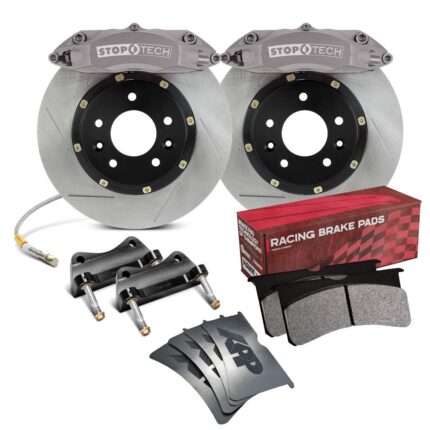
We upgraded the front brakes to a StopTech Big Brake Kit with:
-
ST-43R calipers
-
282 mm ventilated slotted rotors
-
Titanium backing plates.
This combination improves:
-
Heat dissipation (ventilation + slotting)
-
Pad bite consistency
-
Brake modulation and confidence at the limit
Wheel fitment note:
To clear the ST-43R calipers with wheels around ET45, a 20 mm spacer was required.
2) Rear brakes: slotted rotors for stable rear balance
For the rear we installed 280 mm slotted T3 rotors from DBA to support heat control and maintain a stable brake balance under repeated hard braking.
3) Track pad compound: bite + fade resistance
Brake pads were swapped to Hawk Performance HT10 racing compound.
Why it matters:
-
Higher temperature operating range
-
More consistent bite on track
-
Better resistance to fade compared to street pads
Tip for customers: HT10 is a track-focused compound and can be noisy/dusty on the street—perfect for track days, less ideal for daily comfort.
Buy your parts now!
4) Tires: grip is braking performance
Brakes are only as effective as your tire grip. We replaced the original tires with Nankang AR-1 in 215/45R17 for a major grip increase.
Fitment note:
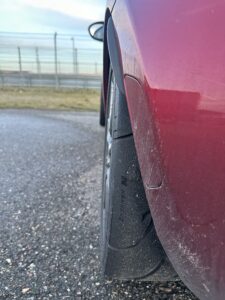
To run this tire size properly, the fenders needed a small roll for clearance.
5) Better pedal feel: braided lines + master cylinder support
To improve pedal response and consistency we installed:
-
Braided stainless steel brake lines of EBC (less line expansion under pressure)
-
Hardrace brake stopper / master cylinder brace
(reduces master cylinder movement under heavy braking)
Result: firmer pedal feel and better confidence when trail braking.
6) Brake fluid: track-safe boiling point
Finally, we flushed and filled the system with Motul RBF 700 brake fluid to handle the heat that comes with track use.
This is one of the most important “reliability” upgrades for anyone doing repeated hot laps.
Result: a safer, more consistent track MX-5 ND
With the upgraded calipers, ventilated rotors, track pads, higher-grip tires, improved hydraulics, and high-performance fluid, this MX-5 ND now brakes harder and more consistently lap after lap—exactly what you want when you’re learning the car on track.
If your goal is to improve braking Mazda MX5 ND for track days, this is a proven upgrade path that prioritizes safety, consistency, and driver confidence.
Photos of testing at circuit Zandvoort